
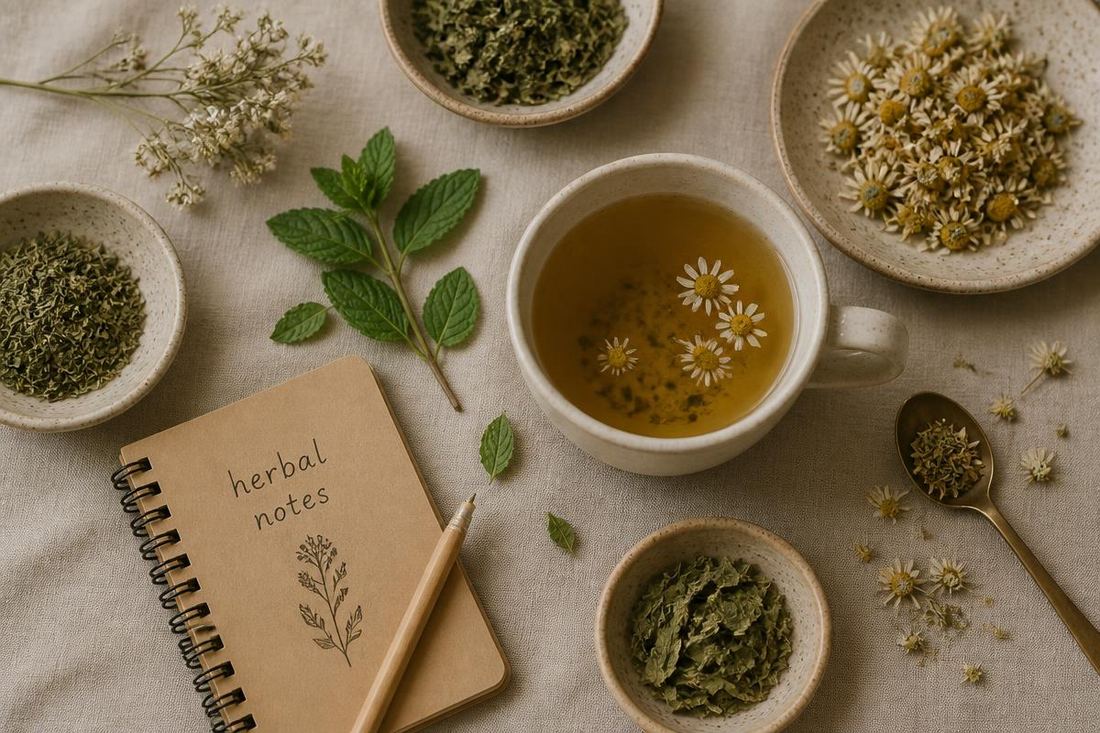
Herbal tea is not medicine and it isn't magic. What it is, reliably, is a warm, caffeine-free, twelve-minute ritual that marks the end of the working day — and a ritual you'll repeat beats an intervention you won't. Here's the short, honest version of what we teach at the table.
On this page
Four herbs worth starting with
Chamomile (Matricaria chamomilla)
Apple-sweet, faintly bitter if you push the steep past six minutes. The classic evening cup. Avoid it if you have a known allergy to ragweed, daisies or marigolds — they're in the same family, and reactions do happen.
Lemon balm (Melissa officinalis)
Lemony, soft, closest thing to a crowd-pleaser we serve. This is the one our sleep clients keep buying again. It blends well with chamomile at roughly two parts balm to one part chamomile.
Peppermint (Mentha × piperita)
Sharp and cooling, popular after heavy meals. Worth knowing: peppermint can loosen the lower oesophageal sphincter, so if you get reflux it may make evenings worse rather than better. Swap to ginger.
Nettle (Urtica dioica)
Green, savoury, more like a broth than a dessert. A daytime cup rather than an evening one. If you take diuretics or blood-pressure medication, clear it with your pharmacist first.
How to brew properly
| Herb | Water | Time | Amount per 8 oz |
|---|---|---|---|
| Chamomile flowers | 205°F | 5 minutes, covered | 1 heaped tsp |
| Lemon balm leaf | 195°F | 7 minutes, covered | 1½ tsp |
| Peppermint leaf | 205°F | 5 minutes, covered | 1 tsp |
| Nettle leaf | Boiling | 10–12 minutes, covered | 1 heaped tsp |
Three things matter more than the numbers. Cover the cup — the volatile oils you paid for leave with the steam. Use loose herb or a wide sachet, because leaves need room to move. And don't re-boil water repeatedly; flat water makes flat tea.
Buying and storing
Buy small amounts often. Dried herbs are aromatics, and aromatics fade — six months is a fair working life, twelve at the outside. Look for whole flowers and recognisable leaf rather than dust, and smell before you buy where you can: chamomile that smells of hay instead of apple is old. Keep everything in opaque tins away from the stove; heat, light and steam are what kill a cupboard.
We buy from Ohio growers where the season allows and tell clients exactly where each tin came from. You're welcome to ask.
Safety and interactions — read this part
Herbs are chemically active. "Natural" is not a synonym for "harmless", and tea is not a treatment for any condition. Please check with your physician or pharmacist before making herbal tea a daily habit if you are pregnant or breastfeeding, taking anticoagulants, sedatives, antidepressants, diuretics or blood-pressure medication, managing liver or kidney disease, or preparing for surgery. Bring the actual tin to the appointment — it's easier than describing it.
Stop and seek advice if you develop a rash, itching, mouth tingling, stomach pain or unusual drowsiness. Introduce one herb at a time for exactly this reason: if something reacts, you'll know which one.
Building the habit
Attach the cup to something you already do without deciding. Kettle on when the dishwasher goes on. Tea steeping while you lay out tomorrow's clothes. The trigger does the work; motivation is unreliable and always will be.
Our ninety-minute wind-down guide puts the cup at T-30, thirty minutes before lights out, which for most people is late enough to feel like a signal and early enough to avoid a 3am wake-up. If you'd rather taste everything before buying anything, our tea education workshop pours six infusions side by side for $45.
Written at the studio at 313 5th St, Marietta, OH 45750. Questions about anything here? Call (216) 767-5400 or email support@zdrave-schtastie.com. This article is general education and not medical advice — see our medical disclaimer.
Keep reading

Ready for a calmer week?
Book a free 20-minute intro call with Jared. No pressure, no package upsell — just a straight conversation about where you are and what would help.